
The Scientific Conference “Global Supply Chains, Aviation and Trade Integration towards Industry 5.0” – An Academic Forum Bridging Research and Practice
On February 1, 2026, the Faculty of Air Transport Economics – Vietnam Aviation Academy successfully organized the scientific conference entitled “Global Supply Chains, Aviation and Trade Integration towards Industry 5.0.” The event served as an important academic forum, bringing together scholars, lecturers, experts, and students to discuss the profound transformations of global supply chains in the context of digital transformation, green transition, and increasingly deep international economic integration.
The conference was organized to create an academic platform for updating emerging trends in supply chains, logistics, and air transport economics in the era of Industry 5.0, while strengthening the linkage between research and practice, as well as between lecturers and students. Through professional exchanges, the Faculty aims to enhance research quality, orient training content in alignment with industry development needs, and contribute to preparing human resources capable of meeting the requirements of international trade integration.
In the opening remarks, the Faculty representative emphasized that Industry 5.0 goes beyond automation and artificial intelligence, aiming instead at a harmonious integration between technology and human-centered values. In supply chains, logistics, and aviation, this is reflected in the optimization of transport systems, the enhancement of customer experience, and the assurance of sustainability and social responsibility.
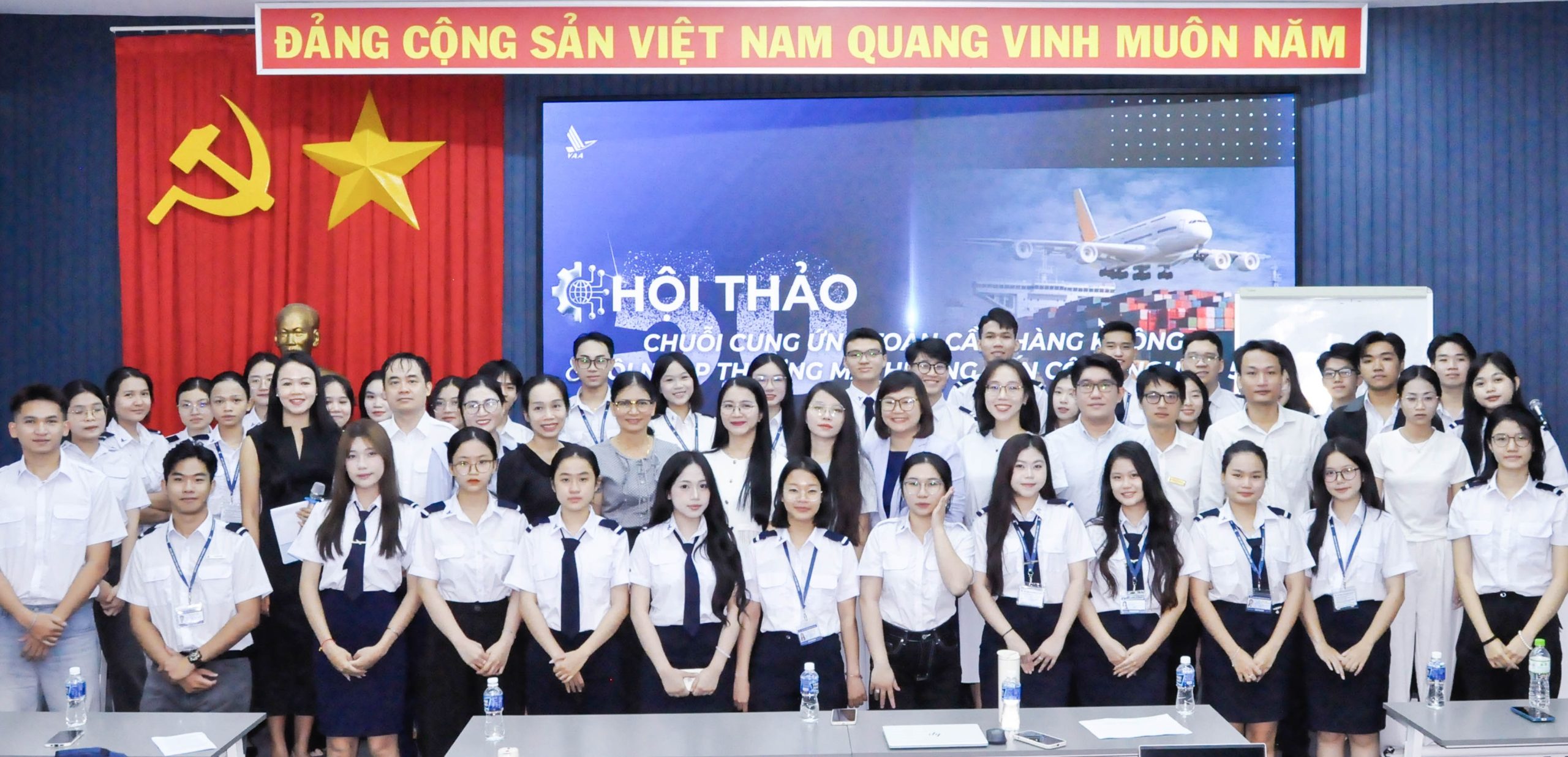
Commemorative Photo at the Conference
The conference was structured into two parallel presentation sessions, reflecting two major thematic pillars shaping the industry in the new era.
Session 1, entitled “Transport, Infrastructure & Supply Chain Restructuring,” focused on core issues related to transport structures, infrastructure capacity, and the transformation of supply chains in the context of globalization and Industry 5.0. The session addressed the role of green taxation, green logistics, and climate finance in promoting a green economy; methods for assessing and improving logistics operational productivity; and structural changes in agricultural supply chains and logistics systems in key economic regions. In addition, presentations examined the impact of e-commerce growth on multimodal transport and infrastructure congestion, thereby highlighting the increasing pressure placed on the national logistics system.
Meanwhile, Session 2, entitled “Green Economy, Sustainability & Customer Psychology,” expanded the discussion to economic–behavioral perspectives and sustainable development. The presentations focused on the impact of pricing policies, perceived price fairness, and airline choice intentions; models for evaluating enterprise satisfaction in the context of digital transformation; as well as competitive advantage and sustainability in agricultural supply chains. This session also emphasized circular supply chain models and green consumption behavior, particularly the psychological factors influencing passengers’ voluntary carbon offset purchasing decisions. The discussions demonstrated that in the era of Industry 5.0, the human factor is not only central to innovation but also decisive to the success of sustainable development strategies. The integration of technology, policy, and in-depth understanding of customer behavior is considered essential to building an environmentally friendly aviation and logistics ecosystem.
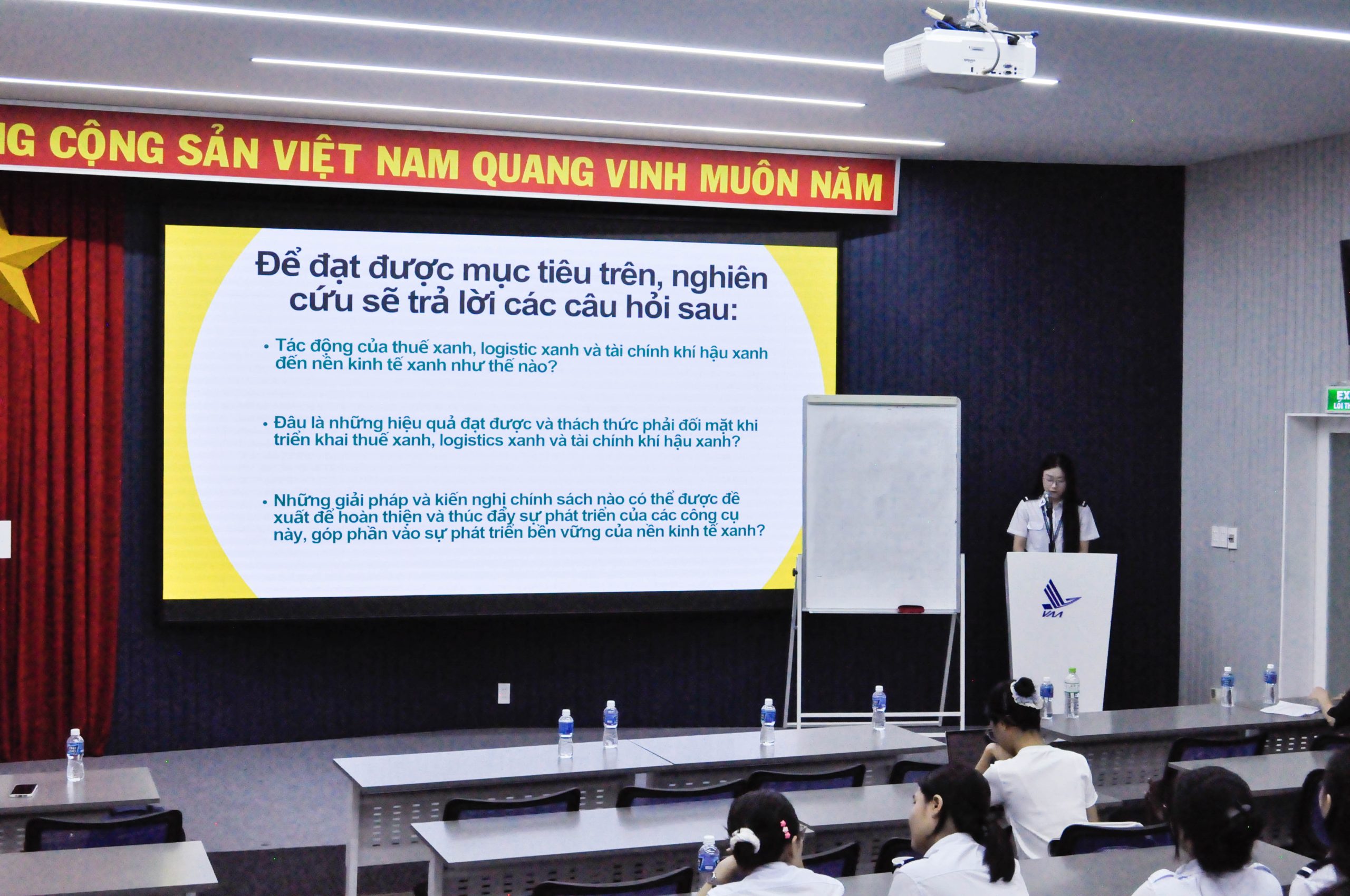
One of the presentations delivered at the Conference
The discussions in both sessions were dynamic, featuring numerous critical questions and in-depth academic exchanges. The active participation of lecturers and students reflected a strong research spirit and affirmed the dynamic academic environment of the Faculty of Air Transport Economics. Through the conference, students had the opportunity to engage with current industry issues, enhance their analytical thinking, and orient their future research directions.
The conference “Global Supply Chains, Aviation and Trade Integration towards Industry 5.0” concluded with valuable recommendations, opening up new research directions. The success of the event was reflected not only in the number of presentations or the scale of organization, but also in the quality of academic exchange and the effective linkage between theory and practice. With the aspiration to become a leading training and research unit, the Faculty of Air Transport Economics will continue to promote scientific conferences, academic seminars, and research collaboration in the coming years. Such events constitute an essential foundation for improving training quality and updating knowledge in the era of Industry 5.0.
(Author: P.C Van)


What is a UAV? What is a drone? What is the difference between UAV and drone?


Vietnam Aviation Academy compiled national standards on ground radio navigation aid systems
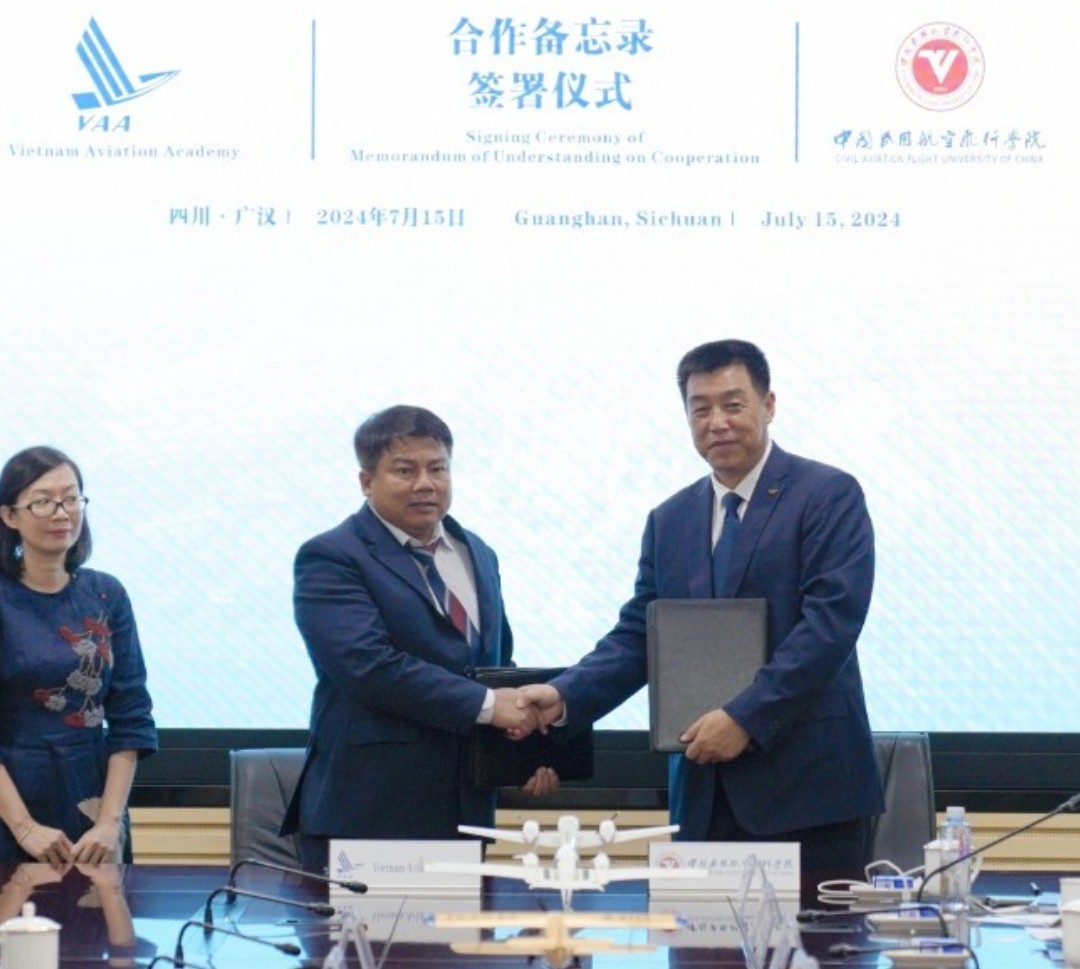
VIETNAM AVIATION ACADEMY HAS SIGNED A COOPERATION AGREEMENT WITH CIVIL AVIATION FLIGHT UNIVERSITY OF CHINA
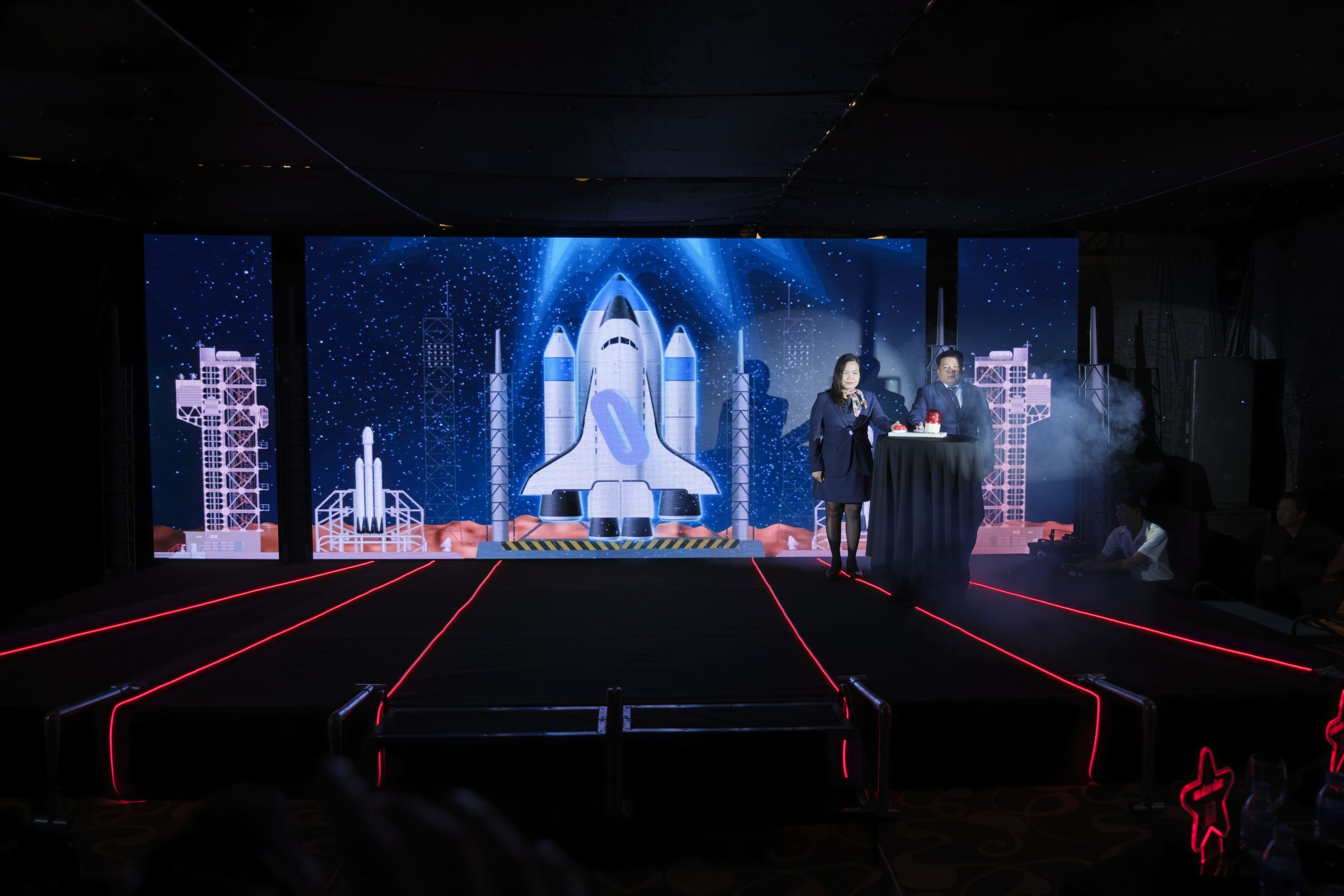
Workshop on Developing a Strategic Plan for the Vietnam Aviation Academy: Resolutely Realizing Key Strategic Objectives

The Impact of Artificial Intelligence on the Global Economy: An Ongoing Revolution

Degree verification
Check now