

Workshop “CITE IT RIGHT: Proper Citation- No Plagiarism”
On the morning of Sunday, 12 July 2026, the International Business Department under the Faculty of Air Transport Economics organised the workshop “CITE IT RIGHT: Proper Citation- No Plagiarism”, attracting the participation of lecturers and a large number of International Business students. The event was a continuation of the academic research skills workshop series, following “Research Like A Pro – Finding the Right Sources, Writing the Right Way”, with the aim of helping students progressively strengthen their research and academic writing competencies while adhering to the principles of academic integrity.
In the context of scientific research and academia placing increasing emphasis on integrity, understanding plagiarism, mastering proper citation practices, and using references accurately have become indispensable skills for university students. With this objective, the workshop was designed as a practical academic forum, enabling participants not only to acquire fundamental knowledge but also to develop the ability to apply it effectively in practice.
Continuing to accompany this workshop series, MSc. Nguyen Thi Ngoc Linh, Lecturer of the Faculty of Air Transport Economics, Vietnam Aviation Academy, served as the keynote speaker. Building upon the knowledge shared in the first workshop, she delivered in-depth insights into essential principles of academic research while guiding students in developing rigorous, scientific, and responsible approaches to learning and research.
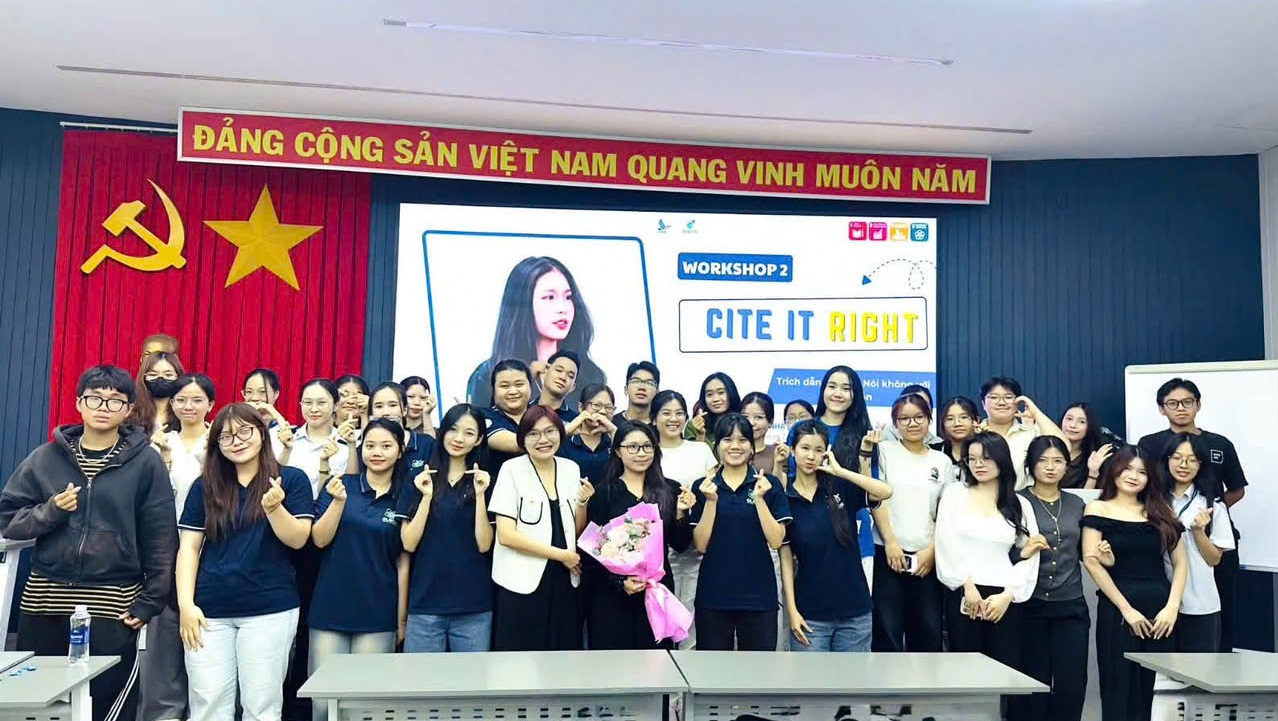
Commemorative photo at the workshop
At the beginning of the programme, the speaker helped participants gain a comprehensive understanding of plagiarism, self-plagiarism, and their common manifestations in learning and research activities. Through practical examples, students were able to identify behaviours that could constitute academic misconduct while learning effective measures to prevent plagiarism and ensure honesty and transparency in assignments, essays, graduation theses, and future research projects.
One of the key topics of the workshop was the role of source citation in academic research. The speaker provided detailed guidance on in-text citation as well as the preparation of reference lists in accordance with the APA 7 referencing style for a wide range of sources, including books, journal articles, dissertations, theses, and websites. By analysing specific examples, students gained a clear understanding of citation principles, methods for acknowledging sources, and important considerations for avoiding common citation errors.
In addition, the workshop devoted time to discussing the citation of artificial intelligence (AI) tools and important considerations when using AI in learning and research. As AI tools become increasingly prevalent, the appropriate, responsible, and academically compliant use of AI has become a topic of great interest among students. The speaker’s insights helped participants better understand the role of AI as a supportive tool while emphasising the importance of critical thinking, information verification, and individual academic responsibility.
Beyond theoretical presentations, the workshop was designed to promote interaction and hands-on learning. Participants engaged in individual practical exercises, directly applying the knowledge they had acquired to tasks involving plagiarism identification, the selection of appropriate citation methods, and the preparation of reference lists following the APA 7 guidelines. This practical session provided students with an opportunity to reinforce their understanding while developing the skills needed to address common challenges encountered in academic learning and research
Following the practice session, many students actively presented their citation, shared their approaches, and discussed unresolved questions directly with the speaker. The discussion was lively, with numerous practical questions raised by participants. The two-way interaction between the speaker and students contributed to creating an open academic environment that encouraged learning, critical discussion, and knowledge exchange.
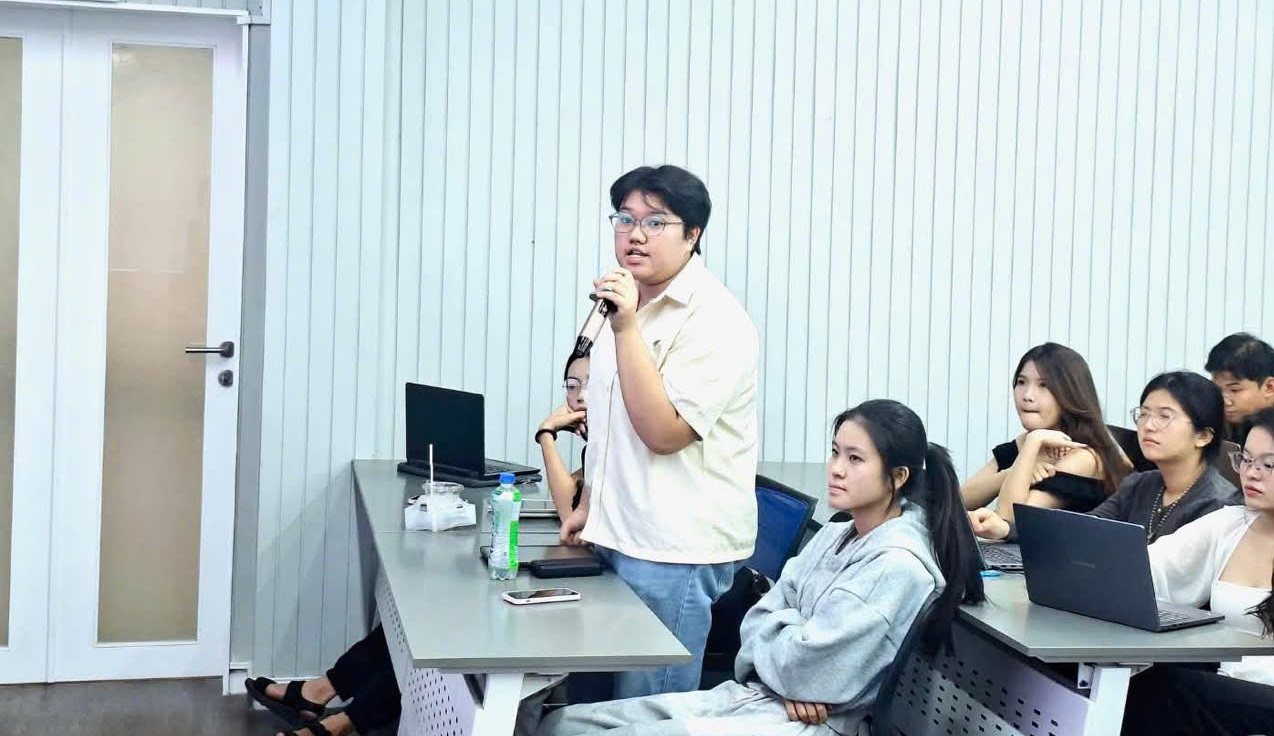
Students asking questions at the workshop
As a continuation of the workshop “Research Like A Pro – Finding the Right Sources, Writing the Right Way”, “CITE IT RIGHT: Proper Citation- No Plagiarism” not only provided students with essential knowledge of citation practices and academic integrity but also further completed the research skills development series designed for International Business students. Through a well-structured combination of theoretical instruction and practical application, the programme delivered meaningful value by enhancing students’ awareness of academic research, fostering scientific working habits, and gradually preparing them to meet the demands of both academic study and their future careers.
With the goal of strengthening academic activities that address practical needs, the Faculty of Air Transport Economics will continue to organise specialised programmes to support students in the comprehensive development of their knowledge, skills, and research capabilities. This also reflects the Faculty’s ongoing commitment to building a high-quality learning environment that promotes academic integrity, creativity, and international integration while contributing to the development of graduates with strong professional competence and ethical responsibility to meet the needs of society.
(Author: P.C. Van)


What is a UAV? What is a drone? What is the difference between UAV and drone?


Vietnam Aviation Academy compiled national standards on ground radio navigation aid systems
EXPLORING THE MEKONG DELTA: A TWO-DAY ONE-NIGHT JOURNEY
VIETNAM AVIATION ACADEMY HAS SIGNED A COOPERATION AGREEMENT WITH CIVIL AVIATION FLIGHT UNIVERSITY OF CHINA

The Impact of Artificial Intelligence on the Global Economy: An Ongoing Revolution

Degree verification
Check now