

WHEN THE STARTUP ASPIRATIONS OF VIETNAM AVIATION ACADEMY STUDENTS MEET RESOLUTION 57
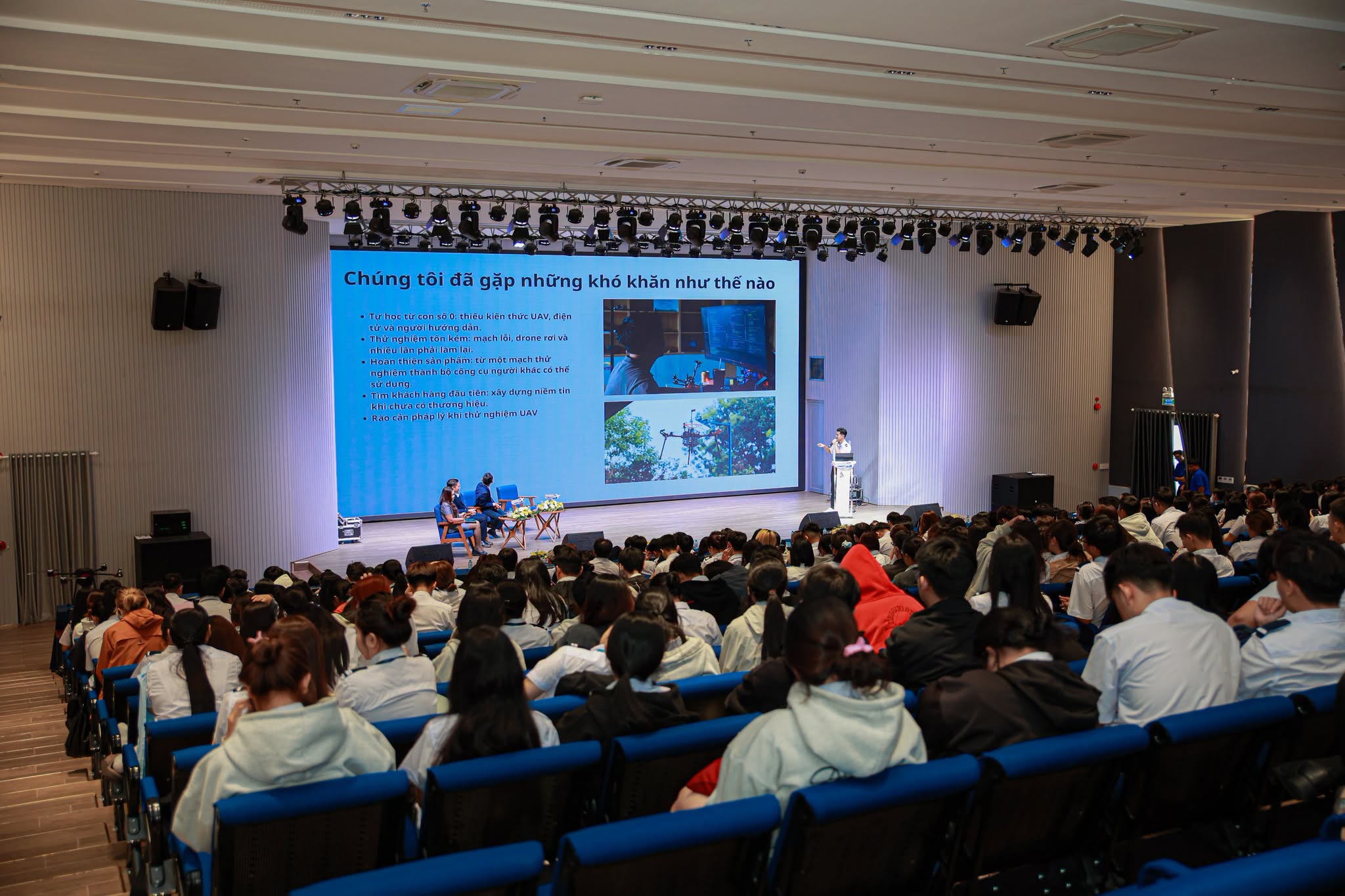
Innovation and Startup Forum 2026
At 8:30 AM on Wednesday, July 29, 2026, Hall F100 at Campus 2 of the Vietnam Aviation Academy (VAA) was packed to capacity with 500 students. This was not an opening ceremony, nor a conventional scientific seminar, but the Innovation and Startup Forum 2026. It served as a landmark meeting point where a Party resolution, a strategic partnership between the academy and an enterprise, and the real-world startup journey of a student converged to address a pressing question: Are innovation and entrepreneurship truly out of reach for students?
- Policy Paving the Way: Resolution 57 Is No Longer “Macro-Level” Theory
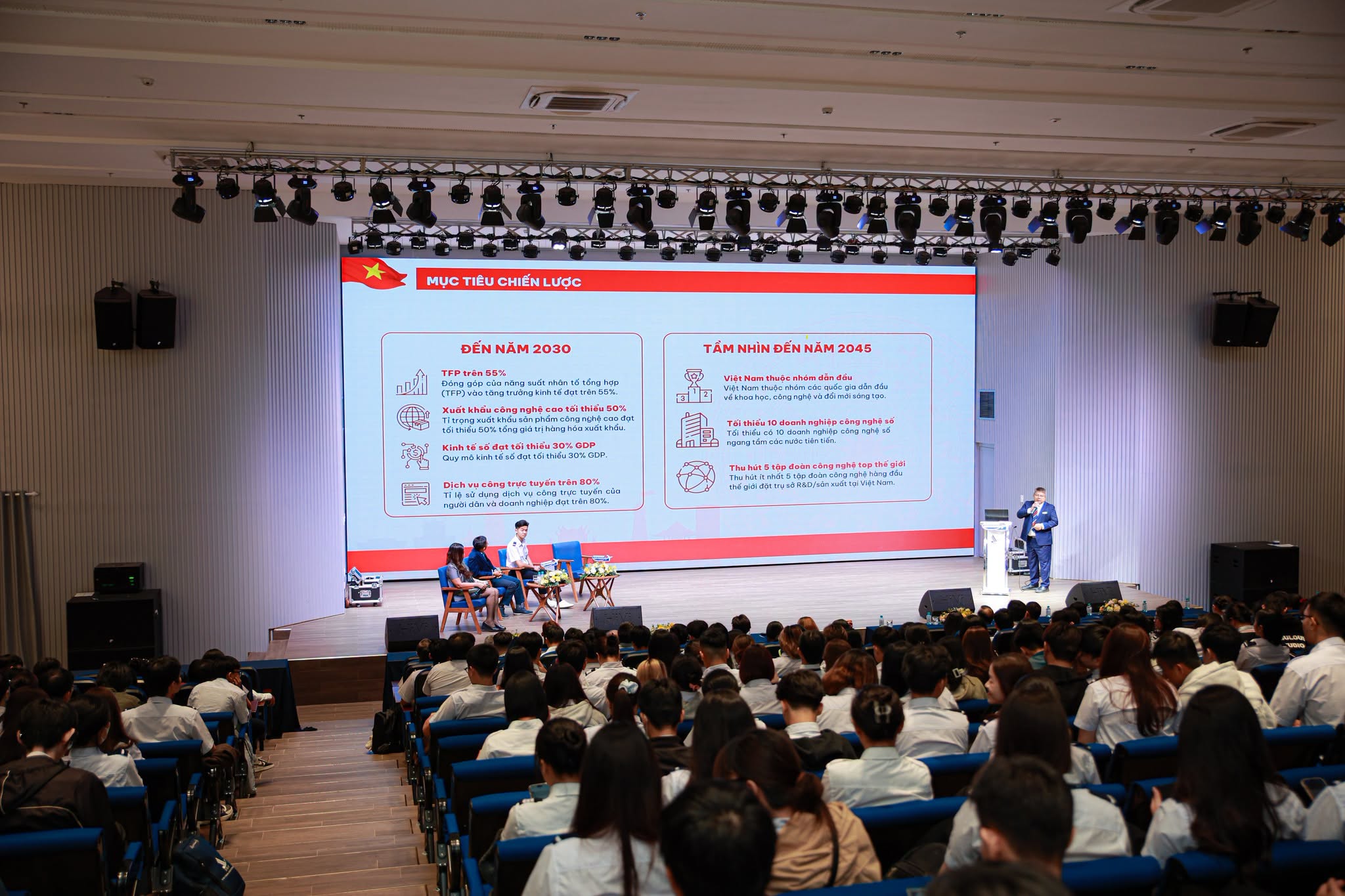
Assoc. Prof. Dr. Tran Hoai An
Opening the forum, Assoc. Prof. Dr. Tran Hoai An — Secretary of the Party Committee and President of the Academy — unpacked a document often perceived by students as abstract and distant: Resolution No. 57-NQ/TW of the Politburo (issued on December 22, 2024).
However, when placed in the context of young individuals harboring entrepreneurial ambitions, the three core pillars of the Resolution prove remarkably relevant:
First – Science and Technology as the Primary Driver: For the first time, science, technology, innovation, and digital transformation are identified as top-tier breakthroughs. They are no longer treated as “secondary” activities alongside teaching, but as the primary engine of development.
Second – Embracing Risk and Time Lag: Perhaps the most meaningful message for the youth is that the Resolution formally recognizes and accepts risk and time lag in scientific research and new technology testing. A student failing an electronic circuit board for the tenth time, or a startup project failing on its first trial, is no longer a “shameful failure” — it is acknowledged as an inevitable part of the innovation journey.
Third – The “Triple Helix” Model: Intellectuals and scientists are key drivers; businesses and citizens are at the center; and the State plays a facilitating, guiding role. Universities, in this landscape, are positioned precisely as the hub connecting “State – University – Enterprise.”
The Academy is working toward establishing highly concrete mechanisms: from integrating Innovation & Entrepreneurship into the core curriculum, recognizing startup projects as valid capstone thesis replacements, to creating a seed fund to provide initial capital for viable projects. The regulatory path and mechanism are open — the remaining question is who dares to step forward,” emphasized Assoc. Prof. Dr. Tran Hoai An.
- A Strategic Handshake and a Commitment to the Low-Altitude Economy
Following the opening session, the entire hall witnessed a symbolic milestone: a formal strategic agreement signed between Vietnam Aviation Academy and Saolatek Company — a tech enterprise founded by a young entrepreneur who currently serves as Vice Chairman & CEO of the Vietnam Aviation, Aerospace, and Unmanned Aerial Vehicle Network (AUVS VN), and Vice Chairman of the Low-Altitude Economic Alliance of Vietnam (LAEP).
At the forum, Founder Tuan Tran shared compelling market estimates: the global low-altitude economic space could reach a valuation of approximately $9 trillion by 2050. This domain spans smart agriculture, energy infrastructure monitoring, logistics delivery, emergency rescue operations, tourism, and national defense.
Yet, what truly inspired the 500 students was not just the multi-trillion-dollar figures, but Tuan Tran’s real-world journey: evolving a personal idea into co-founding a network uniting over 100 major domestic and international organizations (including FPT, VinaCapital, Phenikaa, and VAA).
“When you take action, your failure rate might be high. But if you do nothing, your success rate is guaranteed to be 0%.”— Founder Tuan Tran’s message to VAA students
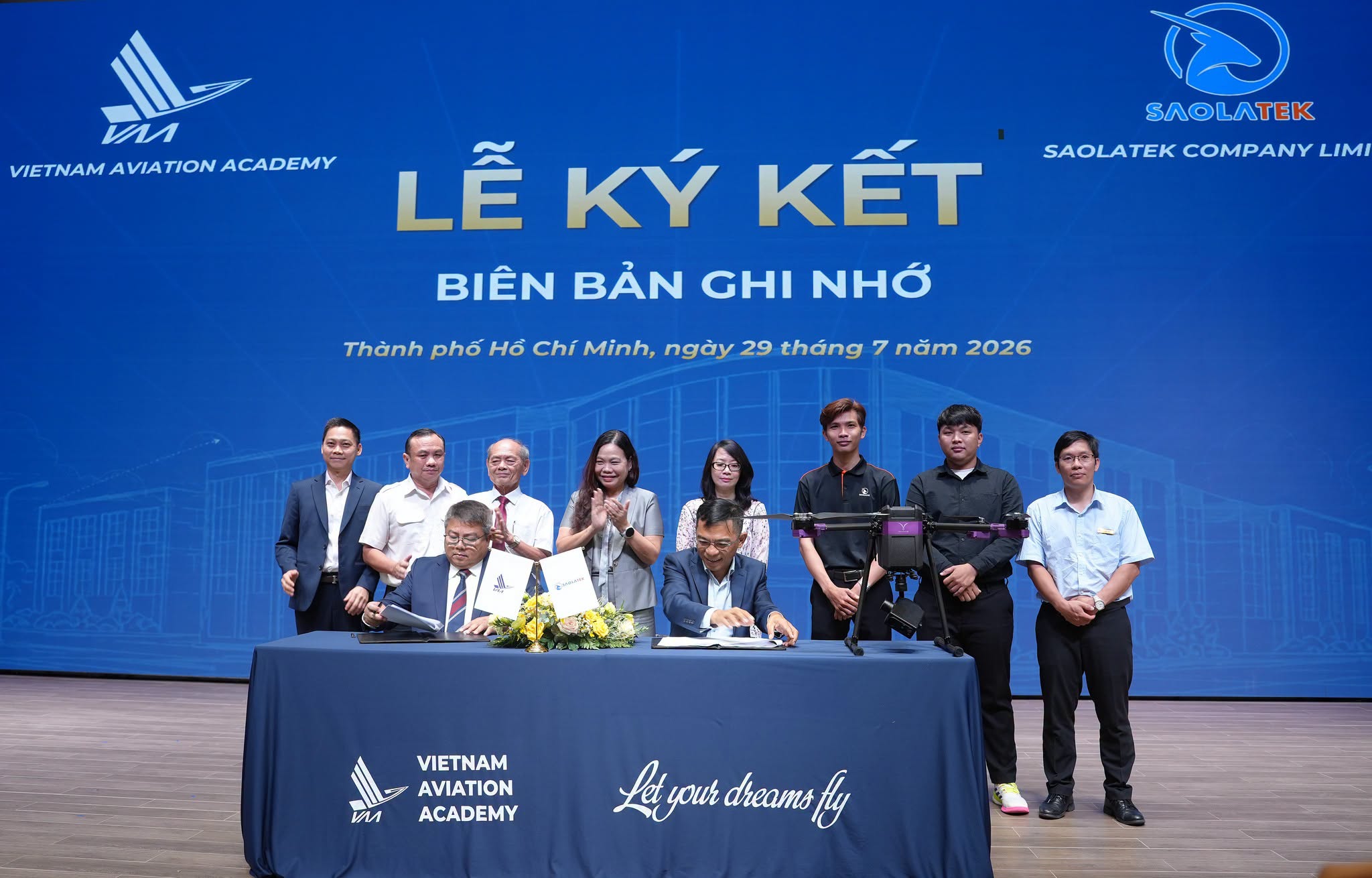
The signing ceremony was far more than an administrative document. It represents a hands-on commitment: Saolatek will open its laboratories, present real-world industrial challenges, and provide direct career opportunities for VAA students in a pioneering technology field in Vietnam.
- Nguyen Van Quy – A Living Testimonial to the Spirit of “Risk Acceptance”
If Assoc. Prof. Dr. Tran Hoai An brought the policy vision and Founder Tuan Tran provided the market perspective, the story of Nguyen Van Quy — a student from the Faculty of Information Technology and a member of the VAA UAV Club — served as living proof that the gap between policy and market can be bridged right on campus.
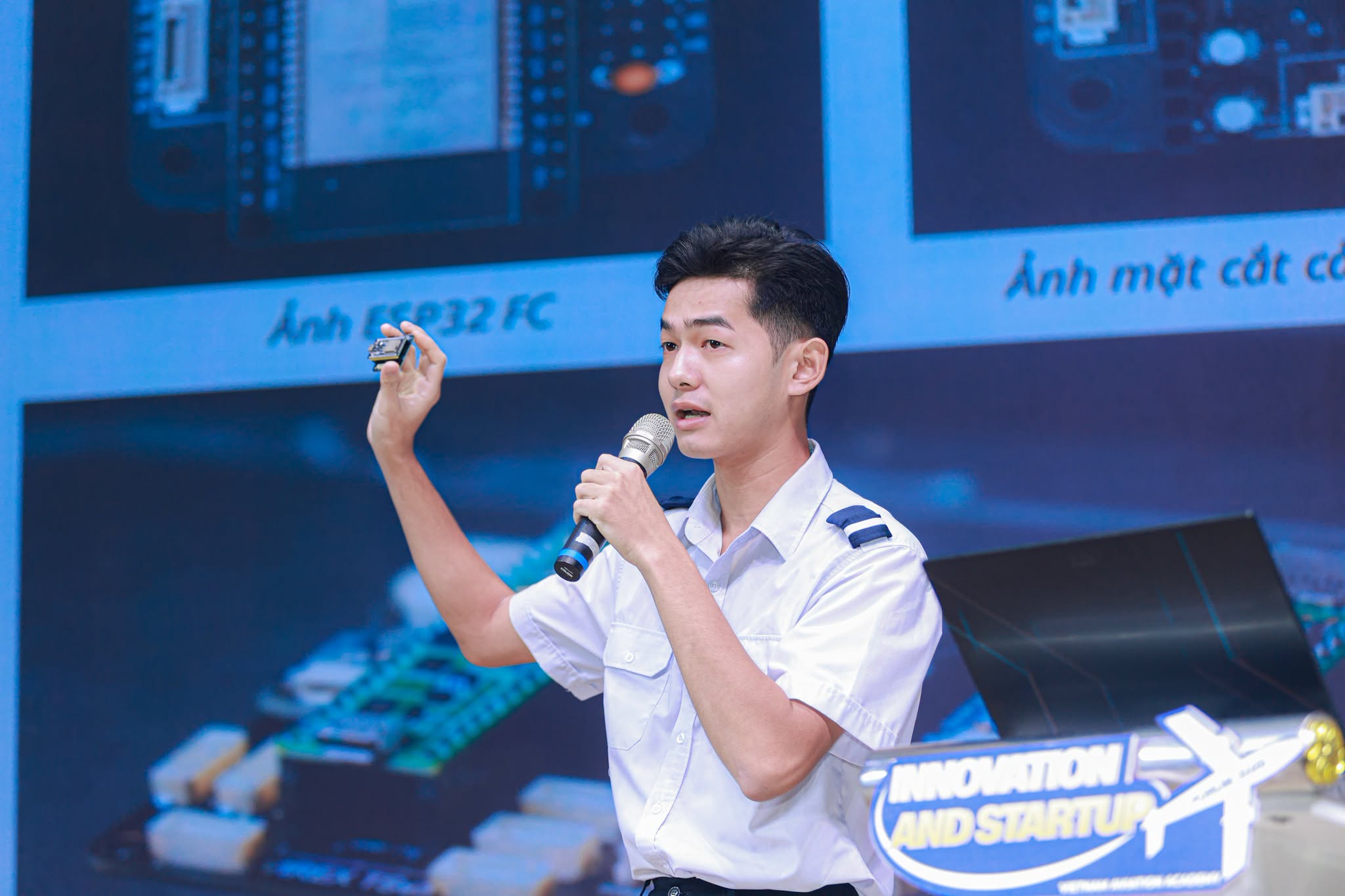
Student Nguyen Van Quy from the Faculty of Information Technology, member of the Academy UAV Club, offered the forum a fresh perspective from a young researcher actively driving innovation on campus.
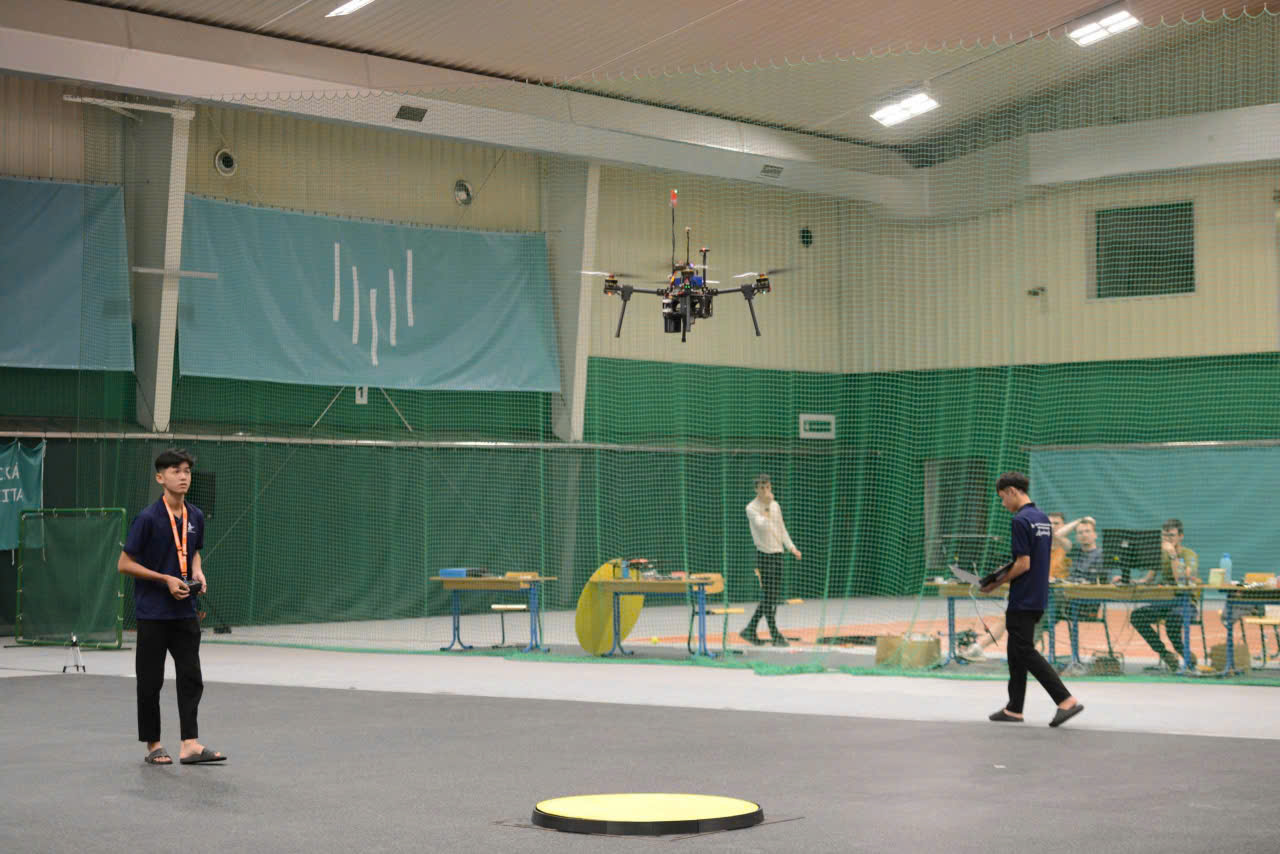
Student Nguyen Van Quy from the Faculty of Information Technology, member of the Academy UAV Club, participating in the Drone Competition held in the Czech Republic
Without an extensive background in aeronautical or electronic engineering, Quy approached Unmanned Aerial Vehicles (UAVs) driven purely by self-directed passion. His core project, the FC ESP32 flight controller board, is designed as an educational tool. It enables beginners to learn flight control programming fundamentals before advancing to complex platforms like PX4 or ArduPilot, directly contributing to training Vietnam’s future flight control engineers.
Representing the student body, Nguyen Van Quy (Faculty of Information Technology), a member of the Vietnam Aviation Academy UAV Club, brought to the forum the perspective of a young researcher actively engaged in innovation and scientific activities at the university.
Quy did not come from an intensive background in aeronautical engineering or electronics; as an Information Technology student, he approached Unmanned Aerial Vehicles (UAVs) purely out of self-taught passion. The product he pursued is a flight controller board named FC ESP32, designed as an educational tool kit: helping beginners grasp flight control programming fundamentals on a simplified platform before transitioning to more complex systems such as PX4 or ArduPilot. This product targets educational applications directly, contributing to building a future workforce of flight control engineers in Vietnam.
That journey began in 2024, when Quy won the Creative Technology Award at the inaugural UAV Contest. It progressed to serious product development in 2025, a first-place finish at the Academy-level UAV Competition, and an international milestone where he represented the nation and won Second Place in the Czech Republic. In 2026, Quy successfully defended his UAV VAA championship title and earned Second Place in another specialized competition. To date, his product has reached over 70 customers and 30 trainees from various universities across the country—a modest figure, yet sufficient to prove that this is no longer just an academic personal project, but a product with genuine market demand.
Quy did not shy away from sharing his hardships: learning entirely from scratch without foundational knowledge or mentors, circuit errors causing drone crashes that forced him to start over, the arduous journey to secure his first customers without an established brand, and the legal hurdles faced during flight testing. Yet, through these setbacks, Quy’s story became the most relatable embodiment of the “risk acceptance” spirit highlighted in Resolution 57—realized not at a high national level, but right in a corner of the Academy’s laboratory.
Three stories, one continuous thread: policy has expanded the horizon, business has opened the door of collaboration, and a student has proven that the door can be crossed—by one’s own hands.
For students of the Vietnam Aviation Academy, this is not merely a slogan about unmanned aerial technology. It serves as a reminder that the innovation journey does not begin in a flawless laboratory or with abundant funding, but with an idea brave enough to be tested right inside this lecture hall.
KHCN&HTQT


What is a UAV? What is a drone? What is the difference between UAV and drone?


Vietnam Aviation Academy compiled national standards on ground radio navigation aid systems
EXPLORING THE MEKONG DELTA: A TWO-DAY ONE-NIGHT JOURNEY
VIETNAM AVIATION ACADEMY HAS SIGNED A COOPERATION AGREEMENT WITH CIVIL AVIATION FLIGHT UNIVERSITY OF CHINA

The Impact of Artificial Intelligence on the Global Economy: An Ongoing Revolution


Degree verification
Check now