


Shaping the Digital Economics Training Program: Highlights from the First Conference
On March 20, 2026, the Faculty of Air Transport Economics successfully organized the conference entitled “Developing the Digital Economics Training Program (First Session).” The event marked an important step in the Faculty’s roadmap for developing a new academic program, aiming to meet the rapid digital transformation of the economy and the increasing demand for high-quality human resources in the field of digital economics.
In the context of a new phase of the industrial revolution characterized by the rapid advancement of digital technologies, big data, and artificial intelligence, the development of a Digital Economics training program holds strategic significance for higher education institutions. Recognizing this, the Faculty of Air Transport Economics has proactively implemented a structured and modern training program, closely integrating theory with practice, with the goal of training human resources capable of adapting effectively to the global digital economy.
The conference was attended by the Faculty’s leadership, all lecturers of the Faculty of Air Transport Economics, as well as lecturers from other universities and representatives from various enterprises. The participation of these stakeholders not only demonstrated strong interest in the development of the training program but also contributed to ensuring its practicality, relevance, and applicability in the context of an ever-evolving labor market.
In his opening remarks, Assoc. Prof. Dr. Co Tan Anh Vu – Vice President of the Vietnam Aviation Academy and Head of the Faculty of Air Transport Economics – emphasized that Digital Economics is one of the key sectors in Vietnam’s economic development strategy in the coming years. Therefore, the development of the training program should not only focus on providing foundational knowledge but also prioritize the development of digital skills, innovative thinking, and adaptability to diverse working environments. The conference was organized as a platform for both academic and practical exchange, enabling the Faculty to gather valuable feedback from experts, lecturers, and enterprises to comprehensively refine the training program.
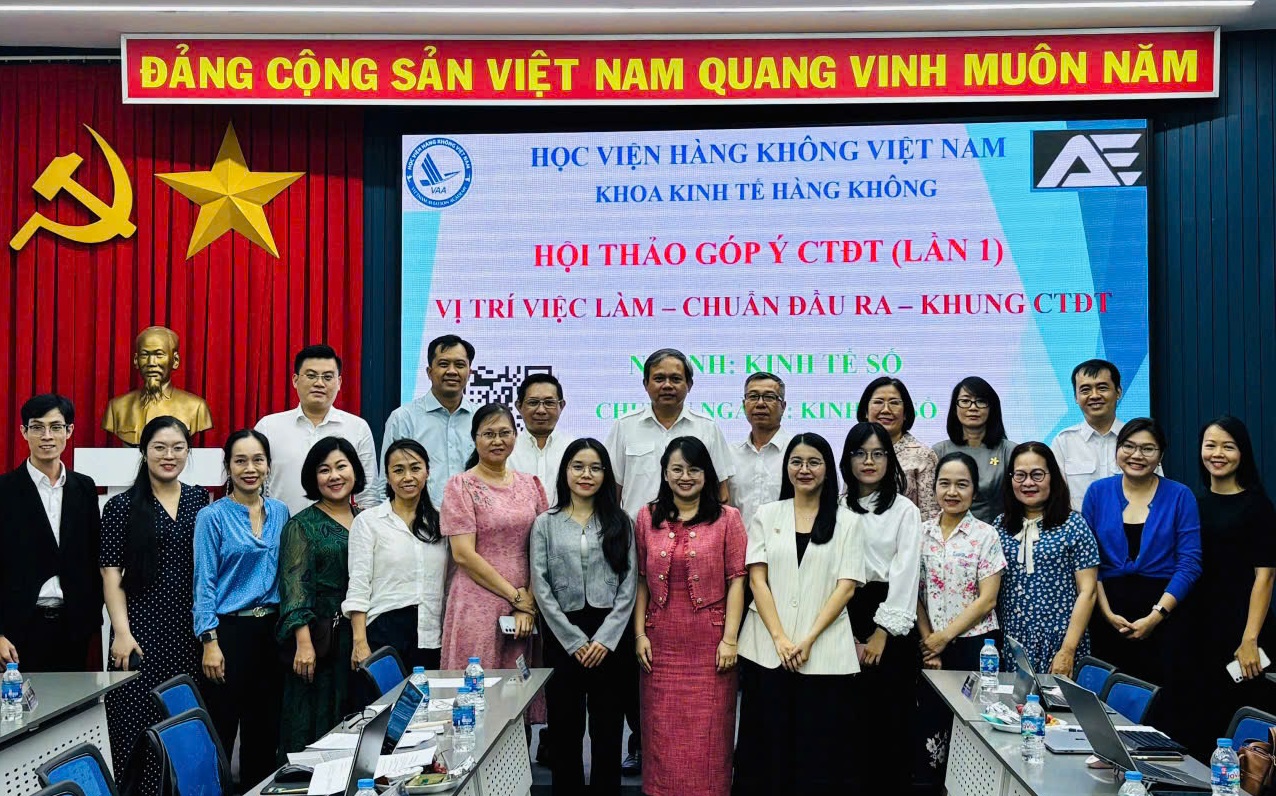
Commemorative Photo at the Conference
At the beginning of the program, Dr. Phung Tuan Thanh, representing the program development team, delivered a detailed presentation on the structure and development orientation of the Digital Economics training program. The presentation focused on training objectives, expected learning outcomes, curriculum framework, and the integration of courses related to digital technologies, data analytics, e-commerce, and management in digital environments. In addition, the program is designed with an interdisciplinary approach, combining economics, management, and technology to equip learners with comprehensive knowledge and the ability to apply it flexibly in practice. The presentation provided an overall view of the program’s orientation and emphasized the necessity of continuously updating teaching content to keep pace with the rapid development of technology and the labor market. It also served as an important foundation for participants to contribute specific and constructive feedback in the subsequent discussion session.
Following the presentation, the second part of the conference featured dynamic and constructive discussions. Representatives from enterprises and universities provided numerous valuable comments on various aspects of the training program, including course structure, teaching methods, and the required skills and competencies of graduates. Notably, feedback from enterprises offered practical insights into recruitment demands, thereby helping the Faculty adjust the program to better align with labor market needs.
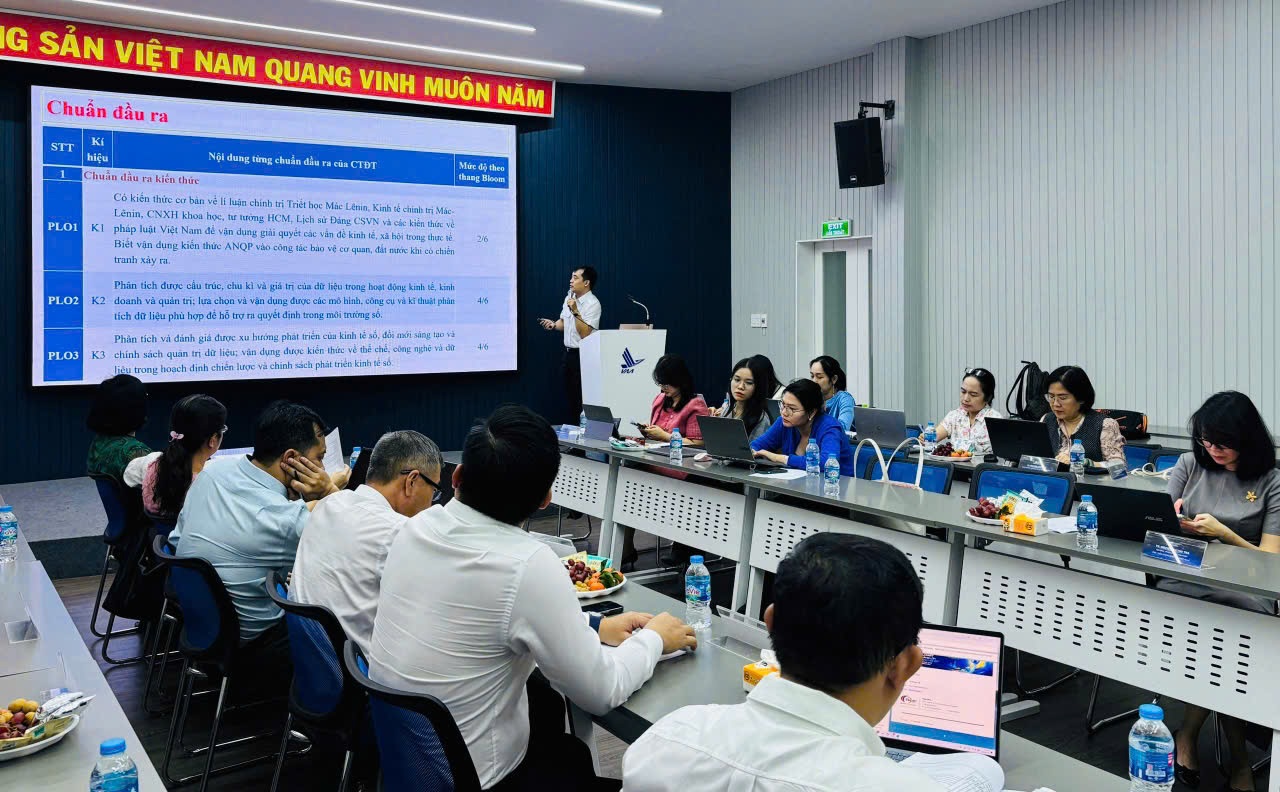
Dr. Phung Tuan Thanh presents the training program
The conference “Developing the Digital Economics Training Program (First Session)” concluded with many practical and valuable contributions. The discussions and feedback collected during the conference will serve as an important foundation for the Faculty of Air Transport Economics to continue refining the program, aiming to develop a modern academic discipline that meets the development requirements of the digital economy in the coming years.
The success of the conference not only demonstrated the Faculty’s thorough preparation and clear direction in developing a new training program but also affirmed its proactive role in educational innovation and in strengthening the connection between academia and industry. In the coming time, the Faculty will continue to organize specialized conferences and gather extensive feedback from stakeholders to progressively complete the Digital Economics training program, contributing to the development of high-quality human resources for sustainable economic growth.
(Author: P.C Van)


What is a UAV? What is a drone? What is the difference between UAV and drone?


Vietnam Aviation Academy compiled national standards on ground radio navigation aid systems
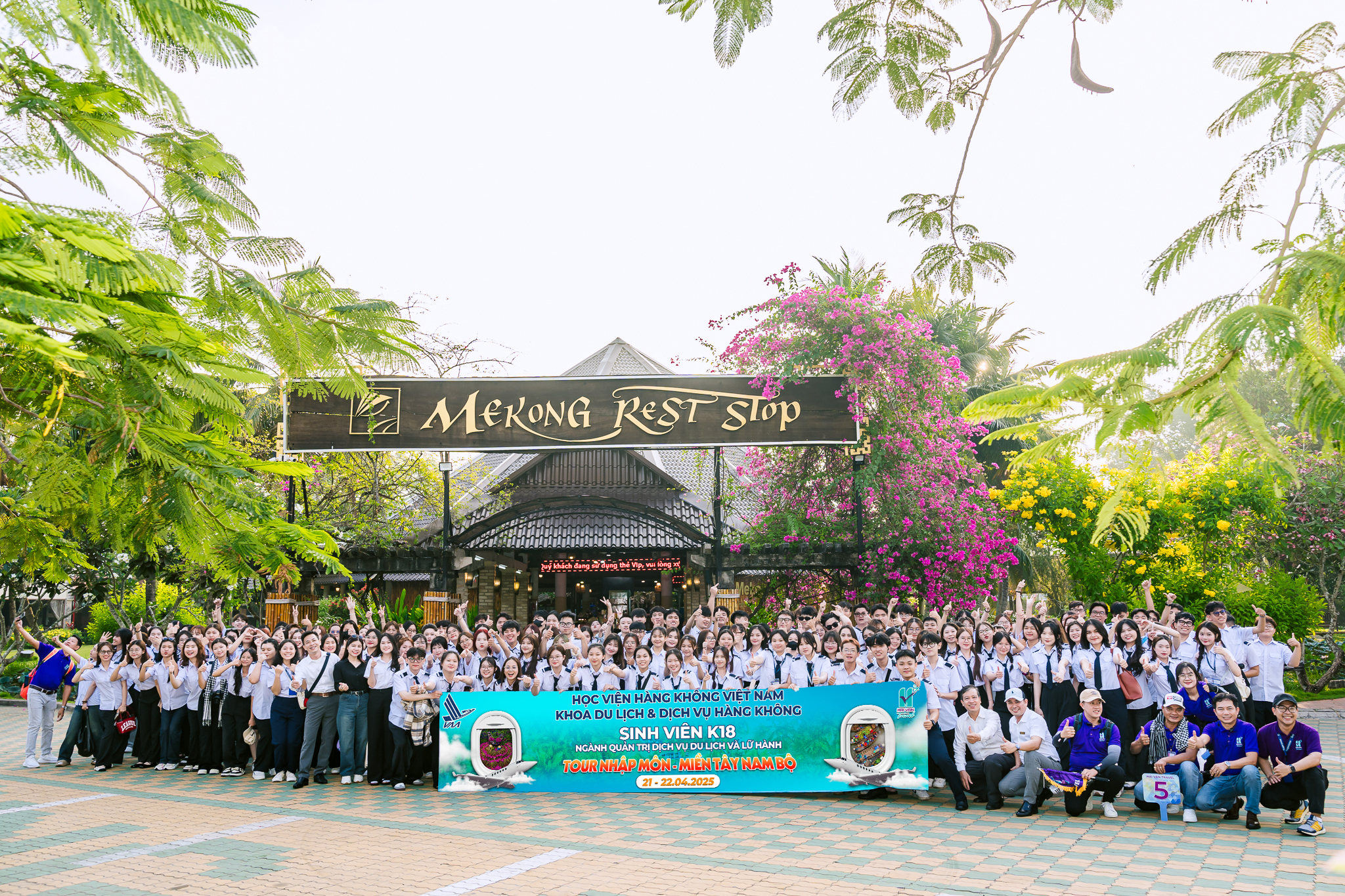
EXPLORING THE MEKONG DELTA: A TWO-DAY ONE-NIGHT JOURNEY
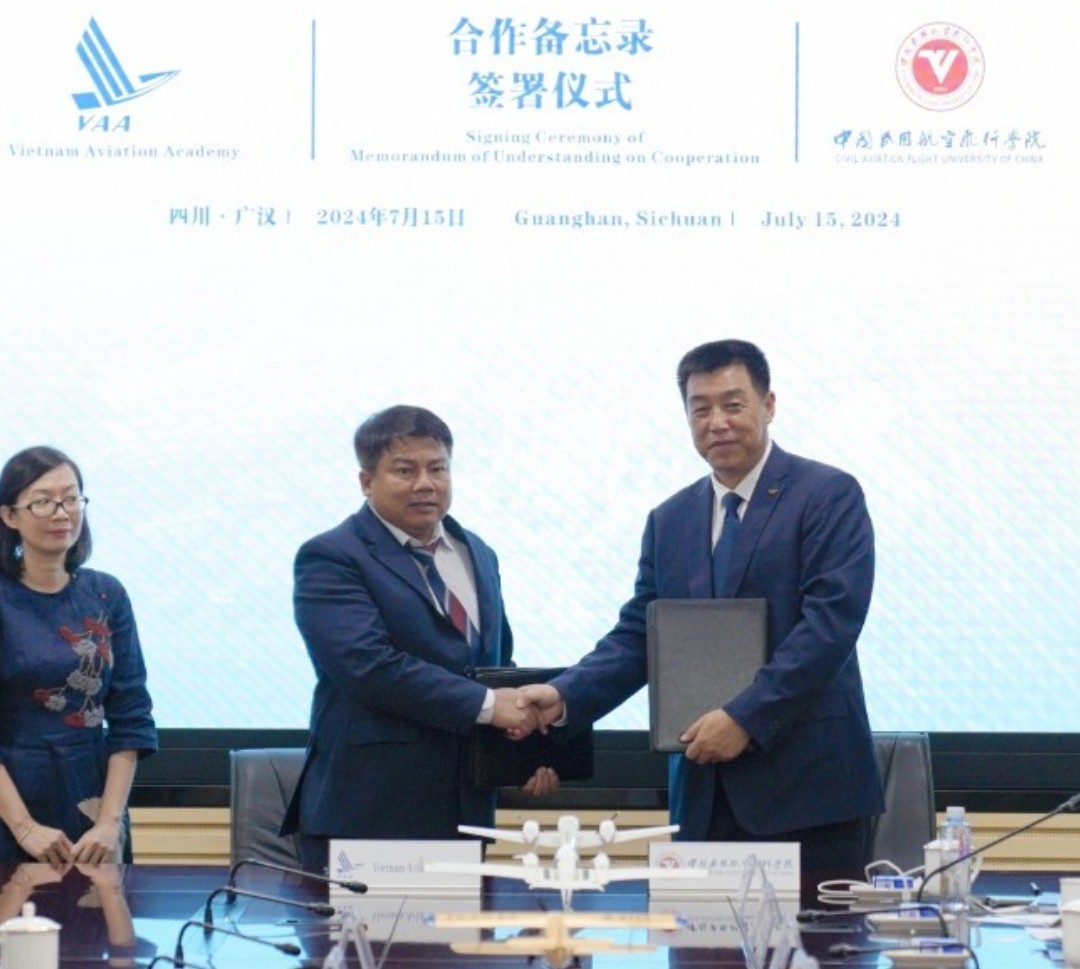
VIETNAM AVIATION ACADEMY HAS SIGNED A COOPERATION AGREEMENT WITH CIVIL AVIATION FLIGHT UNIVERSITY OF CHINA

The Impact of Artificial Intelligence on the Global Economy: An Ongoing Revolution


Degree verification
Check now